
Smart Logistics
A custom neural network integrated to handle operational variability, audit requirements, and integration dependencies across warehousing, customs, and cross-border delivery.
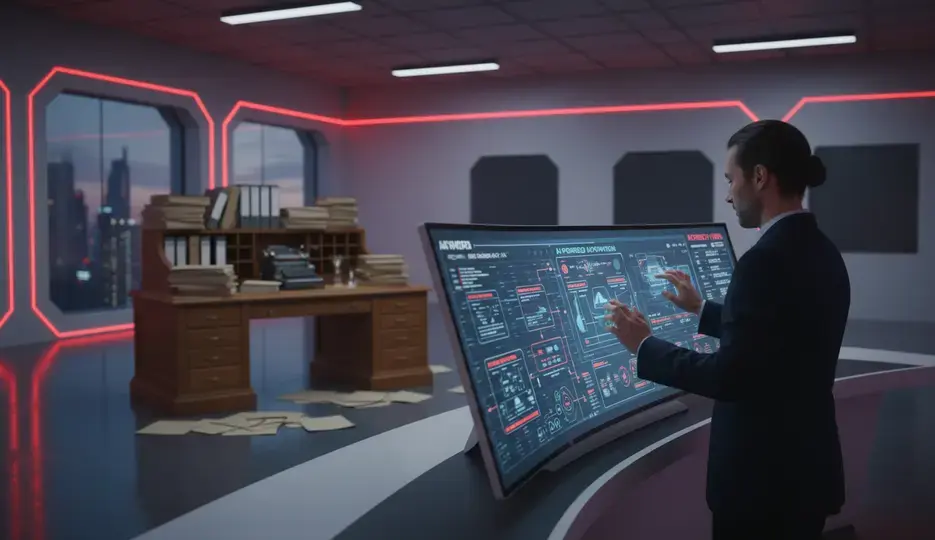
EasyShop operates a cross-border dropshipping model for customers across the Caribbean and Latin America, anchored by a US warehouse address. The operational load is not only receiving packages. It is verification, consolidation, customs readiness, and shipment execution across regions, time zones, and carriers. This case study covers how Aerosoft delivered a Warehouse Management System that centralized those handoffs into one operational platform and reduced dependency on fragmented tools.
The EasyShop WMS initiative was structured around reducing operational friction in receiving, verification, consolidation, packing, labeling, and dispatch while keeping control of data and workflows inside EasyShop’s operating model. For a business spanning warehouse execution in the US and delivery obligations across multiple countries, the primary risk was not building screens.
The risk was introducing a Warehouse Management System that could not reliably coordinate carrier events, inventory states, compliance artifacts, and exception paths at warehouse speed.
A grounded discussion focused on delivery outcomes.
Buyer-facing promises in logistics often collapse at the point of integration. In this program, the delivery approach assumed that most cost and schedule risk would come from edge cases, partial receipts, mismatched invoices, address validation issues, prohibited items, split consignments, rework loops, carrier label failures, and customs-related holds.
The EasyShop WMS design priorities were therefore driven by operational invariants:
In a Warehouse Management System, integrations are the product. The solution was built to support common integration categories without binding the operation to a single vendor.
Standard carrier & tracking integrations with consistent error handling, normalized events, & operator-visible statuses to ensure reliable labeling, shipment updates, & customer notifications across vendors.
Structured customs data capture with validation, role-based access, and full action logging to enforce accountability, prevent incomplete shipments, and support audits or dispute resolution.
EasyShop needed a Warehouse Management System that could hold together customer actions, warehouse execution, and outbound logistics without becoming another tool that staff worked around. The requirement was not a prettier interface. It was operational control.
Aerosoft delivered a custom operations platform that unified customer management, inbound receipt handling, verification, consolidation, and shipment visibility in a single system of record. The intent was straightforward: replace spreadsheet coordination and inbox-based decision-making with workflow ownership that can scale.
EasyShop enables customers to buy from US and UK sellers that do not ship to the Caribbean and Latin America. Orders arrive at a US facility with variable packaging quality and inconsistent documentation. Warehouse teams must validate what was received, link it to the right customer, and move it through consolidation and outbound steps where customs, carrier requirements, and service-level expectations are not uniform.
This environment punishes gaps in traceability. A package that cannot be reconciled quickly becomes a customer support burden, a compliance risk, and a throughput constraint. A Warehouse Management System in this model must handle operational reality, not just inventory records.
The initial request was framed as a one-stop solution across customers, warehouse operations, and shipping. What was actually failing was the connective tissue between steps.
Key breakdowns included:


The surface request was “build an EasyShop WMS.” The underlying problem was that operational visibility and control were becoming a constraint on growth and service consistency.
Teams were running a Warehouse Management System by approximation. Work still moved, but every handoff increased error probability and customer-facing uncertainty. The cost was not just time. It was avoidable rework, duplicated checks, and operational drag that grows with volume.
The delivery risks were not abstract. They were tied directly to how the warehouse runs day to day and how customers judge trust.
The platform had to serve customers, warehouse staff, operations managers, and finance. That means a Warehouse Management System with strict role separation, not shared logins or everyone sees everything screens that create accidental mistakes.
Warehouse actions must be reflected in the system at the point of work. If the Warehouse Management System depends on end-of-day updates, the platform becomes a reporting layer, not an operational tool.
Receipt validation drives customer confidence and downstream shipping decisions. In a cross-border model, errors are expensive because they surface late.
Outbound shipment status has to reconcile with carrier events and internal confirmations. Partial visibility increases support load and delays resolution.
EasyShop’s growth path required higher throughput without matching increases in staff. That pushes the Warehouse Management System toward exception handling, not manual chasing.
These constraints are the difference between software that demos well and software that survives operational pressure. This is also where Warehouse automation software decisions matter, because automation is only helpful when the underlying workflow is enforced and auditable.
Aerosoft approached this as a single operational source of truth, not a collection of bolted-on tools. The strategy prioritized lifecycle ownership and verification checkpoints.
Every package progresses through defined states that map to physical actions. State changes are not cosmetic. They drive what the next team can do, what the customer sees, and what exceptions must be addressed.
The Warehouse Management System separates customer actions from internal execution. Warehouse staff see work queues and validation tasks. Operations teams see throughput and exceptions. Finance and admin functions are permissioned explicitly.
Tracking is not only for carrier events. It includes internal events such as received, verified, consolidated, dispatched, and exception raised. That creates reliable traceability when carrier data is delayed or incomplete.
The system forces validation at the right moments. This is where many Warehouse automation software implementations fail: they automate movement but do not enforce confirmation quality. Here, checkpoints reduce rework and stop bad data from propagating.
The delivered platform behaved like a Warehouse Management System designed for cross-border fulfillment, not a generic warehouse template.
Customers can manage their EasyShop address details, track packages, and view lifecycle progress without relying on email threads. Customer interaction is tied to real package records, not free-form tickets.
Warehouse users manage package intake, link items to customers, and run verification steps. The system supports status updates at the point of work, which protects accuracy and reduces “later reconciliation.”
Receipts can be captured and validated against expected package records. Missing or mismatched information is handled as an exception path, not a silent failure.
Outbound shipments are visible with internal dispatch confirmation and tracking references. The Warehouse Management System provides a consistent view even when carriers vary in event quality.
Every critical object is linked. That makes investigation possible when something goes wrong, and it reduces the cost of answering customer questions because staff can see a complete chain of custody.
The outcome is a Warehouse Management System that reflects warehouse behavior and enforces accountability. It is also the foundation for Warehouse automation software initiatives because it creates consistent events and structured work queues.
This platform was designed to run operations, not to sit beside operations.
Customers and internal teams operate in different environments with different permissions. That reduces the risk of accidental state changes and protects sensitive operational data.
Package and receipt histories are retained as an operational record. When an issue arises, teams can identify who performed what action and when, without reconstructing events from chat logs.
Exceptions are expected in cross-border fulfillment. The Warehouse Management System treats them as first-class flows, with clear paths for resolution rather than informal side channels.
Managers can see what is moving, what is blocked, and where attention is needed. A dashboard is only useful when it is fed by enforced workflows, not by optional updates.
Warehouse processes turn over. The platform includes workflows and conventions that support onboarding and reduce dependence on specific individuals. That is a long-term ownership requirement, not a nice-to-have.
By replacing spreadsheet coordination and inbox routing with a centralized Warehouse Management System, internal handoffs became structured and visible.
Verification checkpoints and linked records reduced mismatch risk and improved confirmation reliability.
When work moves through defined states and exceptions are surfaced early, throughput improves because staff spend less time chasing status.
Customers can see progress tied to actual warehouse actions, which reduces inbound support load and creates clearer expectations.
A Warehouse Management System that supports traceability and repeatable workflows is a prerequisite for expanding regions, carriers, and service offerings without operational chaos.
This delivery held because the system was designed around physical operations and control points, not around generic features.
The workflows matched what staff do: receive, verify, consolidate, dispatch, resolve exceptions. The software did not ask the warehouse to change into an idealized process that only works in demos.
Checks were embedded at the point where mistakes become expensive. That reduces downstream correction cost and prevents customer-facing failures.
Customer actions, warehouse actions, and logistics actions are separated, recorded, and visible. Accountability is a design decision inside a Warehouse Management System, not a cultural hope.
Cross-border fulfillment changes. Carriers change. Requirements change. The platform was structured as an operational core that can incorporate new partners without rewriting the business each time. This is where disciplined Warehouse automation software strategy matters: automation is only sustainable when the core system is stable and owned.
This case is relevant for teams that recognize the gap between having tools and having operational control.
Yes, when the system boundaries are clear. In this project, the focus was to create a single operational record across packages, receipts, and shipments. If your environment includes existing CRM, finance, or carrier systems, the integration plan should be defined around ownership of truth, event timing, and failure handling.
By enforcing workflow states and role permissions that match physical execution. If state changes are optional or if staff can bypass verification, the system becomes reporting. The approach here was to make the Warehouse Management System the place where work is confirmed, not where work is described after the fact.
Ownership means clear operational workflows, auditable histories, and exception paths that do not require engineers for routine issues. The goal is that operations can onboard staff, diagnose problems, and manage throughput inside the Warehouse Management System without fragile workarounds.
Exceptions are expected and must be modeled. The platform includes explicit handling for missing, mismatched, or delayed items so teams can resolve issues consistently rather than through ad hoc communication.
In this case, the deliverable is a custom Warehouse Management System designed to support automation safely. Automation only produces ROI when the underlying workflow is enforced and traceable. The platform provides that foundation, and automation can be layered where it reduces manual effort without reducing control.
A grounded discussion focused on delivery outcomes.
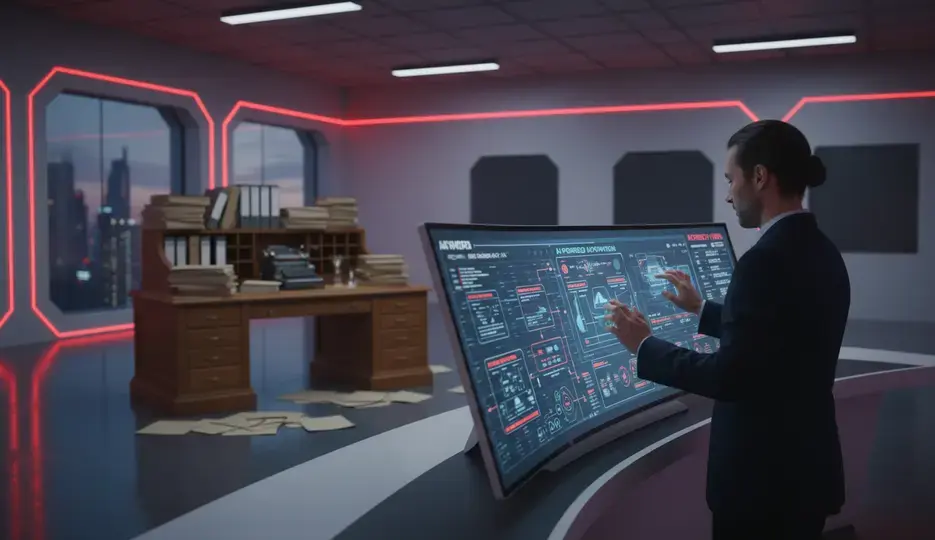
EasyShop operates a cross-border dropshipping model for customers across the Caribbean and Latin America, anchored by a US warehouse address. The operational load is not only receiving packages. It is verification, consolidation, customs readiness, and shipment execution across regions, time zones, and carriers. This case study covers how Aerosoft delivered a Warehouse Management System that centralized those handoffs into one operational platform and reduced dependency on fragmented tools.
The EasyShop WMS initiative was structured around reducing operational friction in receiving, verification, consolidation, packing, labeling, and dispatch while keeping control of data and workflows inside EasyShop’s operating model. For a business spanning warehouse execution in the US and delivery obligations across multiple countries, the primary risk was not building screens.
The risk was introducing a Warehouse Management System that could not reliably coordinate carrier events, inventory states, compliance artifacts, and exception paths at warehouse speed.
Buyer-facing promises in logistics often collapse at the point of integration. In this program, the delivery approach assumed that most cost and schedule risk would come from edge cases, partial receipts, mismatched invoices, address validation issues, prohibited items, split consignments, rework loops, carrier label failures, and customs-related holds.
The EasyShop WMS design priorities were therefore driven by operational invariants:
In a Warehouse Management System, integrations are the product. The solution was built to support common integration categories without binding the operation to a single vendor.
Standard carrier & tracking integrations with consistent error handling, normalized events, & operator-visible statuses to ensure reliable labeling, shipment updates, & customer notifications across vendors.
Structured customs data capture with validation, role-based access, and full action logging to enforce accountability, prevent incomplete shipments, and support audits or dispute resolution.
EasyShop needed a Warehouse Management System that could hold together customer actions, warehouse execution, and outbound logistics without becoming another tool that staff worked around. The requirement was not a prettier interface. It was operational control.
Aerosoft delivered a custom operations platform that unified customer management, inbound receipt handling, verification, consolidation, and shipment visibility in a single system of record. The intent was straightforward: replace spreadsheet coordination and inbox-based decision-making with workflow ownership that can scale.
EasyShop enables customers to buy from US and UK sellers that do not ship to the Caribbean and Latin America. Orders arrive at a US facility with variable packaging quality and inconsistent documentation. Warehouse teams must validate what was received, link it to the right customer, and move it through consolidation and outbound steps where customs, carrier requirements, and service-level expectations are not uniform.
This environment punishes gaps in traceability. A package that cannot be reconciled quickly becomes a customer support burden, a compliance risk, and a throughput constraint. A Warehouse Management System in this model must handle operational reality, not just inventory records.
The initial request was framed as a one-stop solution across customers, warehouse operations, and shipping. What was actually failing was the connective tissue between steps.
Key breakdowns included:
The surface request was “build an EasyShop WMS.” The underlying problem was that operational visibility and control were becoming a constraint on growth and service consistency.
Teams were running a Warehouse Management System by approximation. Work still moved, but every handoff increased error probability and customer-facing uncertainty. The cost was not just time. It was avoidable rework, duplicated checks, and operational drag that grows with volume.
The delivery risks were not abstract. They were tied directly to how the warehouse runs day to day and how customers judge trust.
The platform had to serve customers, warehouse staff, operations managers, and finance. That means a Warehouse Management System with strict role separation, not shared logins or everyone sees everything screens that create accidental mistakes.
Warehouse actions must be reflected in the system at the point of work. If the Warehouse Management System depends on end-of-day updates, the platform becomes a reporting layer, not an operational tool.
Receipt validation drives customer confidence and downstream shipping decisions. In a cross-border model, errors are expensive because they surface late.
Outbound shipment status has to reconcile with carrier events and internal confirmations. Partial visibility increases support load and delays resolution.
EasyShop’s growth path required higher throughput without matching increases in staff. That pushes the Warehouse Management System toward exception handling, not manual chasing.
These constraints are the difference between software that demos well and software that survives operational pressure. This is also where Warehouse automation software decisions matter, because automation is only helpful when the underlying workflow is enforced and auditable.
Aerosoft approached this as a single operational source of truth, not a collection of bolted-on tools. The strategy prioritized lifecycle ownership and verification checkpoints.
Every package progresses through defined states that map to physical actions. State changes are not cosmetic. They drive what the next team can do, what the customer sees, and what exceptions must be addressed.
The Warehouse Management System separates customer actions from internal execution. Warehouse staff see work queues and validation tasks. Operations teams see throughput and exceptions. Finance and admin functions are permissioned explicitly.
Tracking is not only for carrier events. It includes internal events such as received, verified, consolidated, dispatched, and exception raised. That creates reliable traceability when carrier data is delayed or incomplete.
The system forces validation at the right moments. This is where many Warehouse automation software implementations fail: they automate movement but do not enforce confirmation quality. Here, checkpoints reduce rework and stop bad data from propagating.
The delivered platform behaved like a Warehouse Management System designed for cross-border fulfillment, not a generic warehouse template.
Customers can manage their EasyShop address details, track packages, and view lifecycle progress without relying on email threads. Customer interaction is tied to real package records, not free-form tickets.
Warehouse users manage package intake, link items to customers, and run verification steps. The system supports status updates at the point of work, which protects accuracy and reduces “later reconciliation.”
Receipts can be captured and validated against expected package records. Missing or mismatched information is handled as an exception path, not a silent failure.
Outbound shipments are visible with internal dispatch confirmation and tracking references. The Warehouse Management System provides a consistent view even when carriers vary in event quality.
Every critical object is linked. That makes investigation possible when something goes wrong, and it reduces the cost of answering customer questions because staff can see a complete chain of custody.
The outcome is a Warehouse Management System that reflects warehouse behavior and enforces accountability. It is also the foundation for Warehouse automation software initiatives because it creates consistent events and structured work queues.
This platform was designed to run operations, not to sit beside operations.
Customers and internal teams operate in different environments with different permissions. That reduces the risk of accidental state changes and protects sensitive operational data.
Package and receipt histories are retained as an operational record. When an issue arises, teams can identify who performed what action and when, without reconstructing events from chat logs.
Exceptions are expected in cross-border fulfillment. The Warehouse Management System treats them as first-class flows, with clear paths for resolution rather than informal side channels.
Managers can see what is moving, what is blocked, and where attention is needed. A dashboard is only useful when it is fed by enforced workflows, not by optional updates.
Warehouse processes turn over. The platform includes workflows and conventions that support onboarding and reduce dependence on specific individuals. That is a long-term ownership requirement, not a nice-to-have.
By replacing spreadsheet coordination and inbox routing with a centralized Warehouse Management System, internal handoffs became structured and visible.
Verification checkpoints and linked records reduced mismatch risk and improved confirmation reliability.
When work moves through defined states and exceptions are surfaced early, throughput improves because staff spend less time chasing status.
Customers can see progress tied to actual warehouse actions, which reduces inbound support load and creates clearer expectations.
A Warehouse Management System that supports traceability and repeatable workflows is a prerequisite for expanding regions, carriers, and service offerings without operational chaos.
This delivery held because the system was designed around physical operations and control points, not around generic features.
The workflows matched what staff do: receive, verify, consolidate, dispatch, resolve exceptions. The software did not ask the warehouse to change into an idealized process that only works in demos.
Checks were embedded at the point where mistakes become expensive. That reduces downstream correction cost and prevents customer-facing failures.
Customer actions, warehouse actions, and logistics actions are separated, recorded, and visible. Accountability is a design decision inside a Warehouse Management System, not a cultural hope.
Cross-border fulfillment changes. Carriers change. Requirements change. The platform was structured as an operational core that can incorporate new partners without rewriting the business each time. This is where disciplined Warehouse automation software strategy matters: automation is only sustainable when the core system is stable and owned.
This case is relevant for teams that recognize the gap between having tools and having operational control.
Yes, when the system boundaries are clear. In this project, the focus was to create a single operational record across packages, receipts, and shipments. If your environment includes existing CRM, finance, or carrier systems, the integration plan should be defined around ownership of truth, event timing, and failure handling.
By enforcing workflow states and role permissions that match physical execution. If state changes are optional or if staff can bypass verification, the system becomes reporting. The approach here was to make the Warehouse Management System the place where work is confirmed, not where work is described after the fact.
Ownership means clear operational workflows, auditable histories, and exception paths that do not require engineers for routine issues. The goal is that operations can onboard staff, diagnose problems, and manage throughput inside the Warehouse Management System without fragile workarounds.
Exceptions are expected and must be modeled. The platform includes explicit handling for missing, mismatched, or delayed items so teams can resolve issues consistently rather than through ad hoc communication.
In this case, the deliverable is a custom Warehouse Management System designed to support automation safely. Automation only produces ROI when the underlying workflow is enforced and traceable. The platform provides that foundation, and automation can be layered where it reduces manual effort without reducing control.

Digital Systems That Power Growth, Efficiency, And Control.
© 2026 Aerosoft All Rights Reserved.