
01.
Discovery & Data Audit
We audit your inventory data, demand history, supplier base and procurement processes.
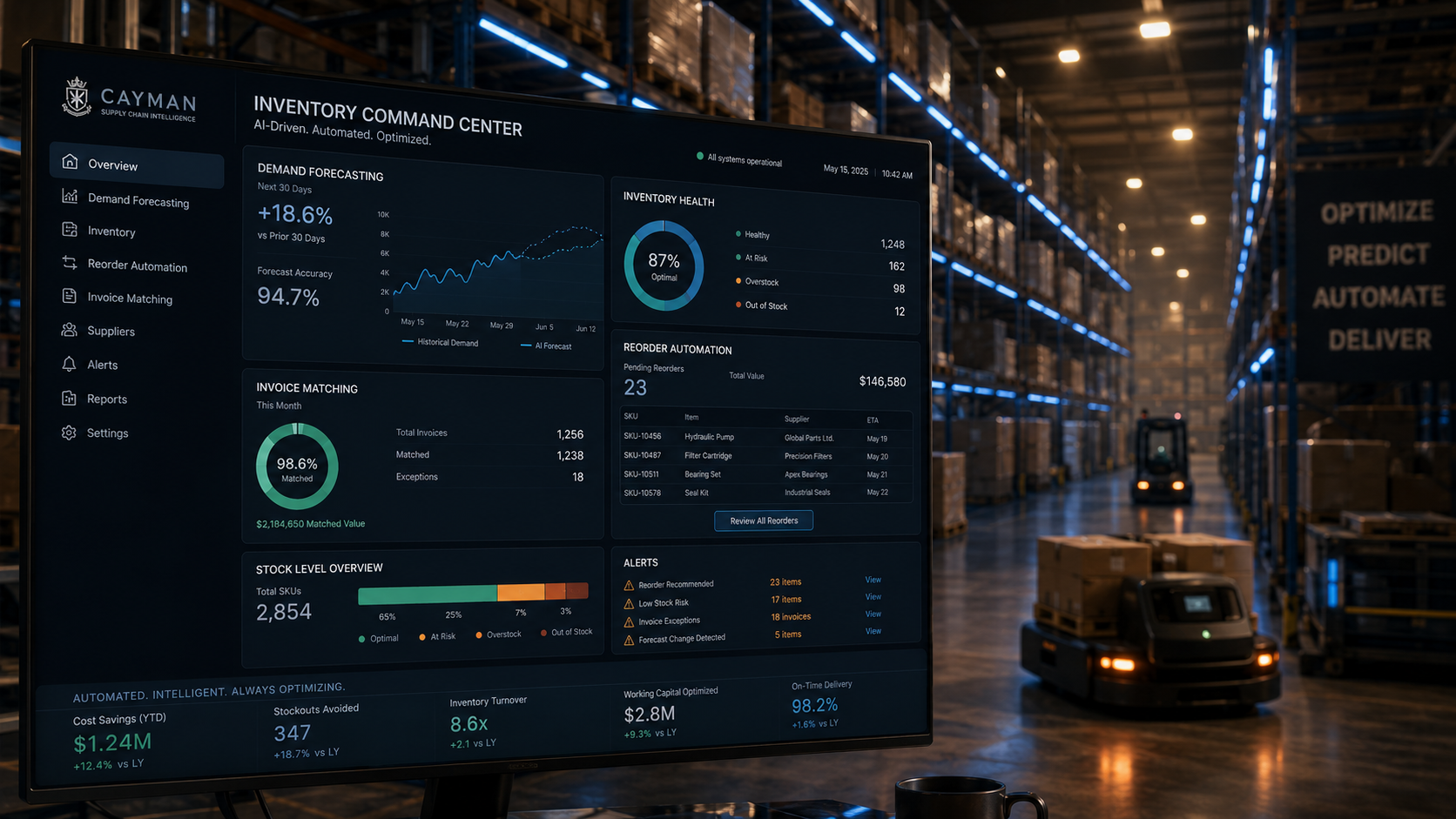
Stockouts, overstocking, supplier delays, demand spikes , the problems that cost businesses the most are almost always predictable from the data. We build AI supply chain systems that monitor stock levels, supplier performance and demand signals continuously , triggering purchase orders automatically when reorder thresholds are reached.
The result is a supply chain team that spends its time on supplier relationships and strategic decisions , not reconciling spreadsheets.
We connect to your ERP, WMS and procurement systems and build forecasting models trained on your actual demand patterns and supplier performance history.


Real-time monitoring, automated reorder triggers and demand forecasting that ensures you have what you need without the overstock you do not.
Discuss inventory
Supplier performance tracked automatically, purchase orders raised on threshold, procurement decisions informed by live data rather than manual review cycles.
Discuss procurement
We audit your inventory data, demand history, supplier base and procurement processes.

We build forecasting models trained on your actual data, configure automated triggers and integrate with your ERP, WMS and procurement systems.
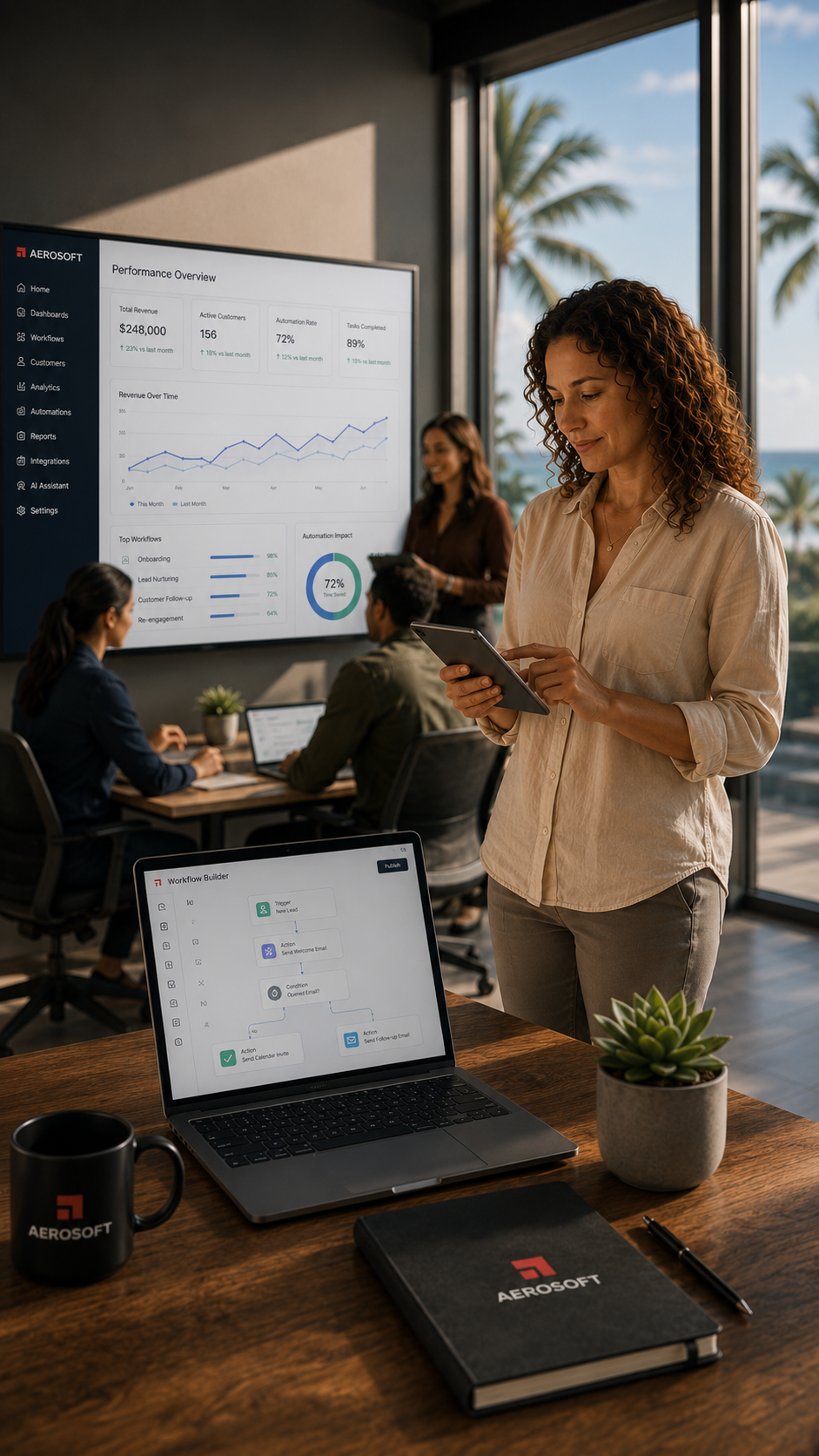
Live deployment with supply chain dashboards, forecast accuracy tracking and continuous model improvement.
AI forecasting models trained on your actual sales history, seasonal patterns and demand signals. Forecasts updated automatically. Reorder recommendations generated from forecasts, not fixed reorder points.
Real-time inventory visibility across all locations and channels. Stock levels monitored with alerts when approaching critical thresholds. Overstock and stockout risks identified automatically.
Purchase orders raised automatically when stock falls below dynamically calculated reorder points. Supplier lead times factored in. Full procurement audit trail maintained for all automated orders.
Lead times, delivery reliability, quality rates and pricing tracked automatically. Performance scorecards generated without manual data collection. Alerts when supplier performance deteriorates.
Continuous monitoring of risk factors including single-source dependencies, lead time variability and demand volatility. Risk scores calculated for each product and supplier. Mitigation recommendations when risk levels exceed thresholds.
Inventory turns, service levels, fill rates and procurement costs reported automatically. Dashboards for operations leaders and executive reporting. Trend analysis identifying which products and suppliers drive the most cost and risk.
Supply chain and inventory AI uses machine learning to optimise stock levels, predict demand, automate purchasing decisions and improve supply chain visibility. For Cayman Islands businesses, where shipping delays and import costs make overstocking and understocking particularly expensive, AI-driven inventory management can significantly reduce carrying costs while preventing the stockouts that lose sales and damage customer relationships.
AI demand forecasting analyses your historical sales data alongside external factors , seasonality, upcoming events, tourism patterns, economic indicators and supplier lead times , to predict future demand for each product more accurately than manual methods. The forecast updates continuously as new sales data arrives, allowing purchasing decisions to be based on current trends rather than historical averages.
Yes. Automated reordering is one of the most immediately valuable inventory AI applications. When stock falls below a dynamically calculated reorder point, the system generates a purchase order automatically, routes it for approval (or sends directly to approved suppliers), and tracks the expected delivery against current demand to flag any situations where stock may run out before the delivery arrives.
Shipping to the Cayman Islands involves longer lead times, higher freight costs and the risk of port delays. AI models for Cayman businesses account for typical shipping times by supplier and origin, seasonal shipping delays around major holidays, customs clearance timeframes and the specific cost structure of Cayman freight. Safety stock calculations and reorder triggers are calibrated to this reality rather than mainland assumptions.
Yes. Dead stock identification is a core inventory AI capability. The system continuously monitors stock age, current demand velocity and future demand forecasts to flag products where holding costs are exceeding reasonable levels. Recommendations might include promotional pricing to clear slow-moving stock, transferring inventory to higher-demand locations or suspending future orders until existing stock is consumed.
Yes. Multi-location inventory AI manages stock across all your locations simultaneously, optimising where stock should be held based on demand patterns at each location. For Cayman businesses with multiple outlets, the system can recommend inter-location transfers to balance stock levels, ensuring your best-selling products are in stock at the locations where demand is highest.
Supplier performance AI tracks on-time delivery rates, order accuracy, quality defect rates and pricing trends for each supplier over time. This data informs purchasing decisions, contract negotiations and supplier diversification strategies. Suppliers that consistently underperform trigger alerts and alternative sourcing recommendations before their unreliability causes a stockout.
Yes. We integrate AI supply chain tools with existing ERP systems, inventory management software, point-of-sale systems and e-commerce platforms. The AI layer reads current stock levels, sales data and purchase order status from your existing systems and feeds decisions and recommendations back into them. You do not need to replace your existing systems to benefit from AI-driven decision-making.
ROI comes from multiple sources: reduced holding costs from lower average stock levels, fewer stockout-related lost sales, reduced emergency freight costs for rush orders, and lower labour costs in purchasing and inventory management. For Cayman businesses where import costs are high and stockouts are particularly painful, the combination of these benefits typically delivers a clear positive ROI within the first six to twelve months of deployment.
Yes. Tourism seasonality is one of the most significant demand planning challenges for Cayman retail and hospitality businesses. AI models the specific demand patterns associated with tourist season peaks, cruise ship schedules, holiday periods and local events, allowing businesses to plan purchasing cycles that ensure full availability during peak periods without excessive overstocking in quieter months.
Yes. Continuous reconciliation between sales data, receiving records and system stock levels flags discrepancies that indicate data entry errors, theft or receiving errors before they cause major inaccuracies. AI can also optimise cycle counting schedules, directing stock counters to the highest-risk SKUs more frequently rather than applying the same counting frequency to all products regardless of their value or discrepancy history.
A focused demand forecasting and automated reordering implementation typically takes six to ten weeks from data integration to live operation. Comprehensive supply chain intelligence platforms with multi-supplier management, multi-location optimisation and advanced analytics take three to five months. We always start with the highest-impact use case and expand from there.
Meaningful demand forecasting typically requires at least twelve months of sales history, and two to three years is better for capturing seasonal patterns. If your data history is shorter, AI can still add value through anomaly detection and automated reordering, while the forecasting models improve as more data accumulates. We design systems that work with what you have now and improve over time.
Yes. One of the risks of experience-dependent purchasing is that expertise walks out the door when a key buyer leaves. AI captures and operationalises purchasing intelligence in the system itself , demand patterns, supplier preferences, reorder logic and performance benchmarks , so purchasing decisions are consistently good regardless of which individual makes them.
Contact us at aerosoft.ky/quote or call +1 (345) 516-5569. We begin with an inventory health assessment covering your current stock accuracy, stockout frequency, slow-moving stock levels and purchasing process costs. This gives us a clear picture of where AI can deliver the most immediate value and informs a prioritised implementation plan.
Book a discovery call and we’ll show you which supply chain risks in your business are visible in your data right now.
Request a quote