Restaurant Software and POS Development in the Cayman Islands
Systems that turn busy nights into happy regulars.
Let’s talkAerosoft builds restaurant software for Cayman Islands venues. Reservations and waitlists, online ordering and delivery, point of sale and kitchen display, plus the stock and cost reporting that tells you what a busy night actually earned.
- Reservations, waitlists and table management
- Online ordering, delivery and pickup
- POS and kitchen display integration
- Stock, wastage and plate cost reporting
Cayman restaurants and bars run on three things: bookings, the till and word of mouth. Aerosoft builds the systems that protect all three.
Ask any restaurateur on Grand Cayman where the money leaks, and it is rarely the food. It is the two-top that booked online and never showed, the delivery order that printed twice, the drinks comped at the bar that the owner never sees, and the Monday spent reconciling tips across a dozen servers by hand. A good kitchen is the easy part. The systems around the floor are where the margin quietly disappears.
Most of that comes down to software that was never built for a Cayman restaurant. Tills shipped in from overseas assume one currency, one tax rule and an internet connection that never drops. They do not know about the 15% service charge, the mix of KYD and USD at the same table, the cruise-day lunch rush, or the Saturday night when Flow goes down and you still have to take payment. So the floor ends up working around the software instead of the other way round.
AeroSoft builds restaurant software the other way round. We start with your service: how tables turn, how orders reach the pass, how tips are pooled, what a busy Friday actually earns. Then we shape the POS, ordering, reservations and reporting to fit it, and we keep it running with hosting and support based in George Town. Restaurants across Grand Cayman, SeaRock among them, run their point of sale, online ordering, digital menu, reservations and kitchen display on systems we built and look after.
What we hear most from Cayman restaurant owners.
Tables left empty on peak nights
No-shows and last-minute cancellations leave covers unfilled and revenue on the table.
Empty seats are your most expensive problem. Online reservations with automated reminders and a real-time waitlist fill cancellations before they cost you.
See how we solve itOrders lost between floor and kitchen
Verbal orders and manual tickets creating errors, delays and unhappy tables.
Communication breakdowns kill the dining experience. Digital order management with kitchen displays ensures every table gets exactly what they ordered.
See how we solve itNo visibility into what drives revenue
Gut-feel menu decisions with no clear picture of which dishes or shifts perform best.
Data-driven restaurants outperform those running on instinct. Integrated POS analytics show exactly where to cut, promote and optimise.
See how we solve itSystems for every part of the floor and the pass.
Restaurant POS
The till your floor actually runs on. Fast order entry on fixed terminals or handhelds, split and merged checks, course firing, KYD and USD tendering with conversion at the point of sale, and the 15% service charge applied the way your venue does it. It keeps taking orders and printing to the kitchen when the internet drops, then syncs the moment Flow or Logic is back. Most venues run it on a monthly plan that covers the software, updates and a support line that answers during service, not just office hours.
Online ordering, delivery and pickup
Your own ordering page for pickup and delivery, wired straight into the POS and the kitchen, so a web order lands on the same ticket rail as a table. You set the delivery zones, from George Town out along Seven Mile and beyond, your own fees and your own hours. Because the orders come through your site, you keep the margin the third-party apps take in commission, and you keep the guest’s details instead of renting them back.
Digital menu and QR ordering
A digital menu guests open from a QR code at the table or on your website, with photos, allergen notes and prices you change yourself in seconds. When the catch of the day runs out, you 86 it once and it disappears everywhere at once. Add order-and-pay at the table and a party can fire another round and settle up without waiting to catch a server, which turns tables faster on a packed night.
Reservations, waitlist and table management
Online reservations that show real table availability, hold deposits on peak nights and cruise-day lunches, and send SMS and email reminders that cut no-shows. A live floor plan shows the host who is seated, who is finishing and who is still waiting, and a digital waitlist texts walk-ins when their table is ready instead of handing out buzzers. A cover that cancels gets offered back to the waitlist automatically.
Kitchen display
Tickets from the floor and from online go straight to screens on the line, colour-coded and timed, so nothing rides on a handwritten chit or an order shouted over the pass. The expo sees every active ticket and how long it has been working, courses fire in the right order, and the Saturday rush stops turning into guesswork. Bump a dish and the floor knows in real time that it is ready.
Restaurant websites and hosting
A fast, mobile-first website that shows the menu, takes bookings and takes orders, built to be found when a visitor searches for somewhere to eat near Seven Mile Beach. We host it on infrastructure we manage, keep it patched and backed up, and keep it loading quickly, so the site that represents your venue is never the slow one. Hosting and support run month to month, so it stays looked after without you thinking about it.
Guest CRM and loyalty
Every booking, order and visit builds a single guest record, so you know who your regulars are, what they drink and when they last came in. Run a loyalty or rewards scheme, send a targeted email or SMS about a new menu or a quiet Tuesday, and bring people back without paying a platform for the privilege. The guest list is yours, held in your own system.
Gratuity and payroll
Tip and service-charge pooling worked out automatically, by hours or by role, with a clear record every server can trust instead of a disputed spreadsheet. It splits across front and back of house the way your team agrees it, exports clean figures for payroll, and keeps the paperwork straight for staff on work permits. The month-end tip run stops being somebody’s Sunday night.
Stock and plate-cost reporting
Recipes costed to the plate, so you know the real margin on every dish and not just its menu price. Track stock as it sells, flag wastage, see which suppliers and which items actually move, and get the food-cost percentage that tells you whether last week made money. When a supplier raises a price, you can see in minutes what it does to your margins.
Restaurant marketing
Getting found by stay-over visitors planning dinner and by locals deciding where to eat tonight. We handle the restaurant website SEO, the Google Business Profile that shows your hours and menu in search and maps, and the social and email that fill the quiet shifts. Reported back in bookings and covers, not impressions.
Software that has to survive a Friday night service.
A POS that drops a ticket is an annoyance in most industries. On a full floor at 8pm it is a walked table and a bad review. That difference shapes everything we build.
-
01
Speed over everything. A server has seconds, not minutes. Order entry, check splitting and payment are built to be quick on a handheld and on the terminal, because a till that lags costs you covers and turns.
-
02
It works when the internet does not. Island connections drop and power flickers in storm season. The POS keeps taking orders and printing to the kitchen offline, then syncs automatically when the line returns, so service never stops at the till.
-
03
Built for the floor, not the office. We design around how your servers, bar and kitchen actually move during a rush, including the awkward exceptions, because that is exactly where generic restaurant software gives up.
-
04
One connected system. Reservations, POS, online ordering, kitchen and reporting share one source of truth, so a cover booked online, a drink rung at the bar and a dish sent from the pass all land in the same numbers you read on Monday.
What changes when the software finally fits.
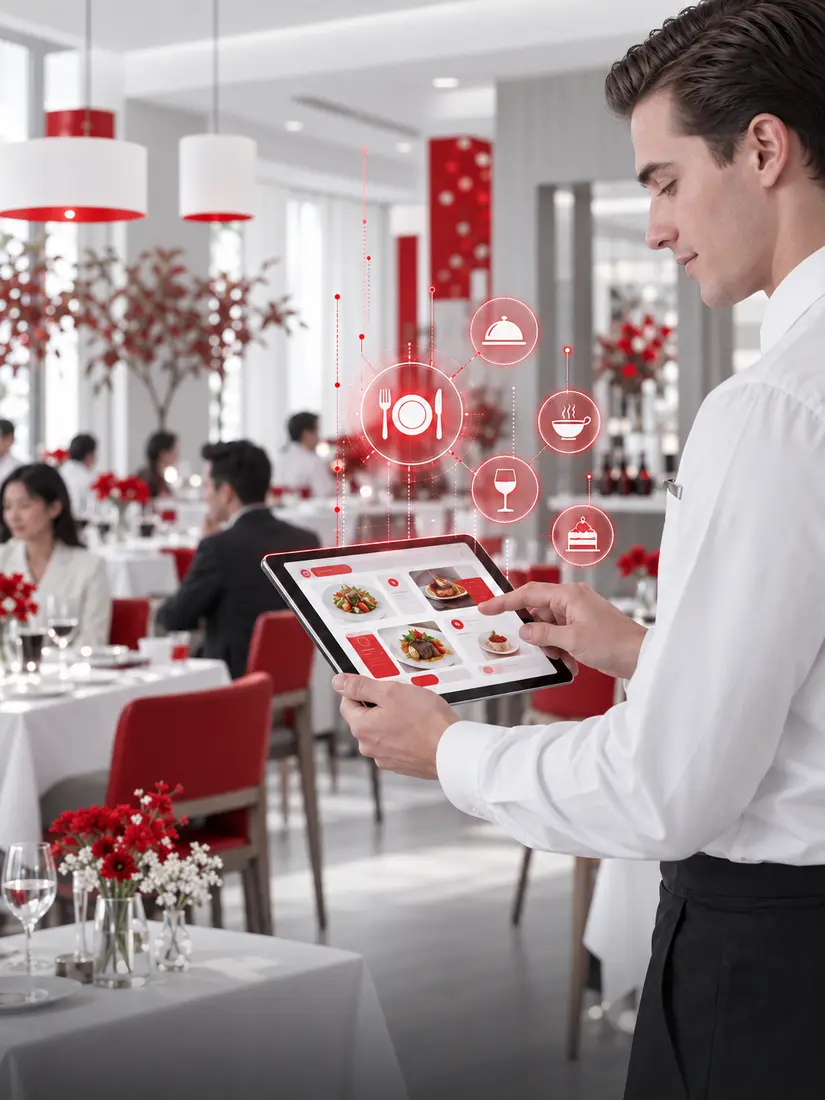
When the system is built around your service instead of imposed on it, the difference shows up on the floor first. The host seats guests from a live floor plan instead of a paper book. Orders reach the pass the moment they are rung, so the kitchen stops chasing missing chits. Online orders and table orders share one rail, so a busy lunch does not split into two separate scrambles. Servers spend their shift with guests rather than fighting the till.
It also changes what you can see. Disconnected tills and spreadsheets hide the things that decide whether a restaurant makes money: which dishes carry the margin and which just carry the menu, which shifts are worth the labour, where comps and voids pile up, and how much of a cruise-day rush actually reached the bank. One connected system turns that into numbers you can read on a Monday morning and act on by the weekend.
And it changes who is in control. The guest list, the menu, the ordering and the reporting live in your system, not in a third-party app that owns your customers and charges a commission on every order. You own the setup, we host and support it month to month, and adding a second location, a new service line or a delivery area is a change we make, not a platform you start again on.
The services behind a restaurant build.
A restaurant build is rarely one thing. It usually pulls on a few of our core services working together. Here is where most venues begin.
Software Development
The POS, kitchen display and reporting engine, built around your service and your menu rather than a till shipped in from another market.
Web Development
The website, online ordering and digital menu guests actually use, fast on a phone and hosted and supported by us month to month.
AI Automation
Reservation reminders, waitlist texts, review requests and guest follow-ups handled automatically, so the floor spends its time on service.
What Cayman restaurant owners ask us.
What restaurant software does Aerosoft build for Cayman Islands venues?
We build restaurant POS, online ordering for pickup and delivery, digital and QR menus, reservations with waitlist and table management, kitchen display, guest CRM and loyalty, gratuity and payroll, stock and plate-cost reporting, and restaurant websites with hosting and marketing. Most venues run several of these together as one connected system, built for how restaurants and bars actually operate in Grand Cayman.
Does the POS keep working if the internet goes down?
Yes. The POS keeps taking orders, splitting checks and printing to the kitchen while the connection is down, then syncs automatically when Flow or Logic comes back. Given how often island connections drop and how storm season behaves, offline service is something we build for, not an afterthought.
Can it handle KYD and USD and the 15% service charge?
Yes. The till tenders in both KYD and USD with conversion at the point of sale, shows both on the receipt where you want them, and applies the service charge the way your venue does, including how it is split across the team. It is set up for how money actually moves across a Cayman table.
Do real Cayman restaurants already run on Aerosoft?
Yes. Restaurants across Grand Cayman, SeaRock among them, run their POS, online ordering, digital menu, reservations and kitchen display on systems we built and support. We are happy to walk a prospective client through how a working Cayman venue uses it day to day.
Will my own online ordering save the third-party delivery commission?
Largely, yes. Orders placed through your own site go straight into your POS and kitchen, so you keep the margin the delivery apps take in commission and you keep the customer details. Plenty of venues run their own ordering alongside the apps at first, then move regulars across to ordering direct.
Can you work with our existing POS hardware, printers or payment processor?
In most cases, yes. We work with standard receipt and kitchen printers, cash drawers, handhelds and the main card processors used in Cayman. Where you have hardware worth keeping, we build around it. Where it is holding service back, we will tell you plainly rather than sell you more of it.
How does gratuity and payroll work for a team on work permits?
Tips and service charge are pooled and split automatically by your venue’s rules, with a clear record for every staff member and clean figures exported for payroll. It keeps the paperwork straight for staff on work permits and turns the month-end tip run from a Sunday-night job into a few minutes.
How long does it take to get a restaurant up and running?
A POS, menu and reservations setup for a single venue typically goes live in a few weeks, including the menu build, hardware and staff training. A fuller build with custom online ordering, loyalty and reporting across more than one location takes longer. We run the new system alongside your current one before cutover, so service is never put at risk.
What does it cost, and is there a monthly fee?
Setup is quoted up front once we have seen your floor, your menu and the hardware you want to keep. The software, updates, hosting and support then run on a monthly plan scaled to the size of the venue, so the system stays current and looked after rather than frozen the day it launches. You get a fixed proposal before anything is committed.
Can one system run more than one restaurant?
Yes. Group operators run several venues on one platform, with each location’s menu, pricing, floor plan and staff kept separate while the reporting rolls up, so an owner can compare sites at a glance. Adding a new location is a setup we handle, not a platform you start over on.
Do you build the restaurant website too, and do you host it?
Yes. We build fast, mobile-first restaurant websites with the menu, booking and ordering built in, and we optimise them to be found when visitors and locals search for places to eat on Grand Cayman. We host and support the site month to month, keep it patched and backed up, and keep it quick.
Fill the tables.
Keep every order.
Tell us where the night goes sideways: the no-shows, the lost tickets, the tips that eat your Monday. We’ll show you the restaurant system we’d build to fix it, and run it with you afterwards.
Request a quote