One Point-of-Sale Codebase Running Restaurants Across Cayman
Aerosoft built and runs a restaurant point-of-sale and ordering platform for Grand Cayman brands. One shared codebase gives each restaurant a public ordering website, staff till and kitchen display, with brand settings and data kept separate.
Aerosoft built a restaurant point-of-sale and ordering platform for Grand Cayman brands, including Desi Kitchen, Curry in a Hurry and Dumplings Delights. One codebase serves multiple restaurants through brand configuration files and isolated data. Each deployment gives customers, till staff and kitchen staff the tools they need from one application.
- One shared codebase serves any restaurant without forking code.
- Each restaurant has its own configuration file and isolated data.
- Every deployment includes a public ordering website, staff till and kitchen display.
- The system covers loyalty, promotions, attendance, messaging, reporting and day-end summaries.
staff till, kitchen display
a config file and its own data
KYD and USD
or phone on the store network
Restaurants with different brands, same core needs
Each restaurant needed more than a till. Orders could come from dine-in tables, quick service, online ordering, to-go, pickup and delivery. Staff needed PIN sign-in, roles, floor plans, table seats, item modifiers and allergy notes.
The harder question was how to run several brands without creating a separate system for each one. Forked code would mean repeated work and uneven behaviour. Aerosoft needed one application that could carry each brand’s setup while keeping its data separate.
One order flow across three live surfaces
The application had to serve customers, till staff and kitchen staff at the same time. The public ordering website, staff till and kitchen display all needed to work from the same order data, while each restaurant kept its own configuration and records.
Many brands, one base
Each restaurant needed its own setup without a separate code branch. Aerosoft made each brand a configuration file, with isolated data and one shared application.
Tickets move clearly
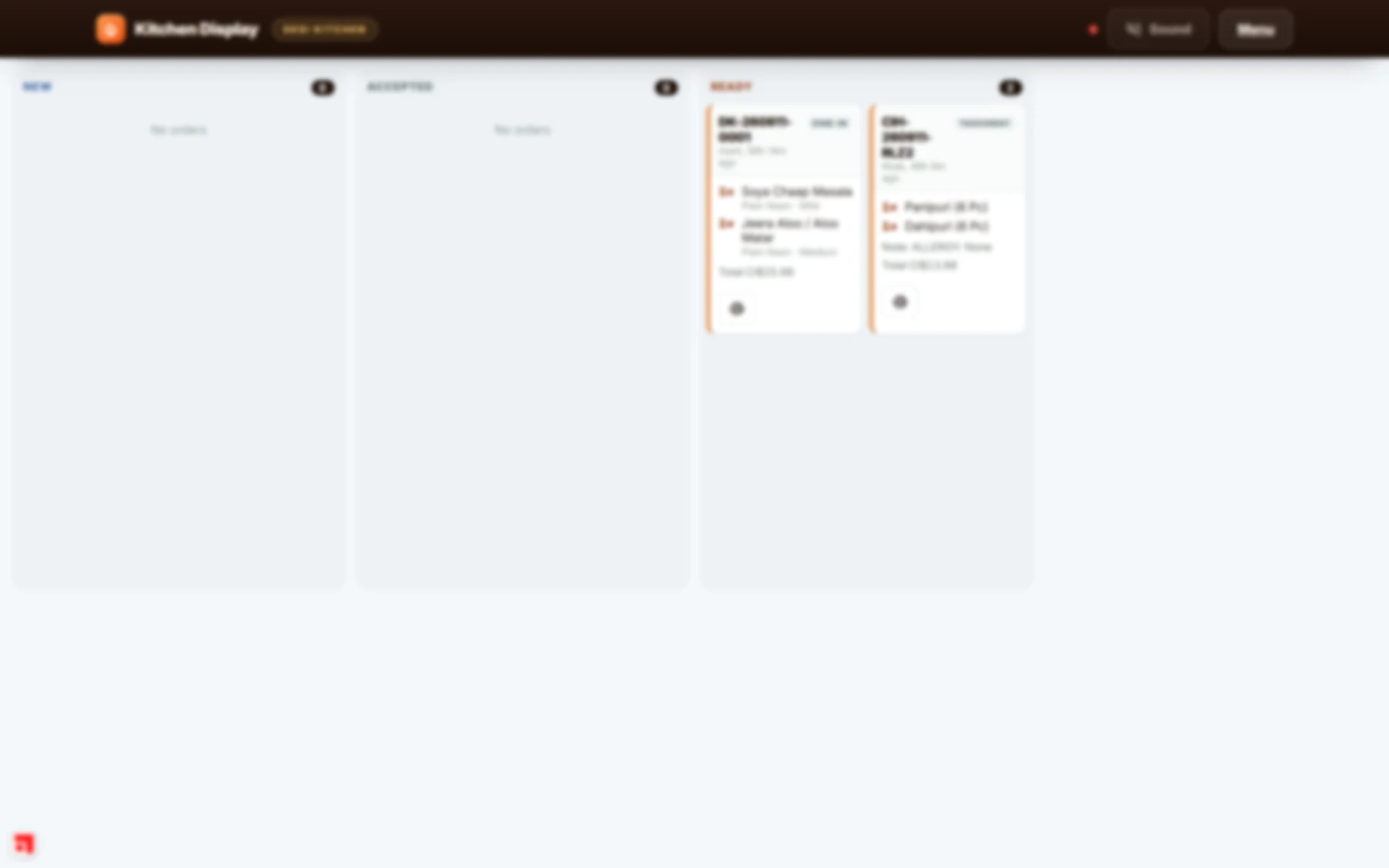
Kitchen staff needed to see what was new, accepted and ready. The kitchen display carries ticket status, item modifiers and allergy notes, with thermal ticket printing to the kitchen.
Tables are not generic
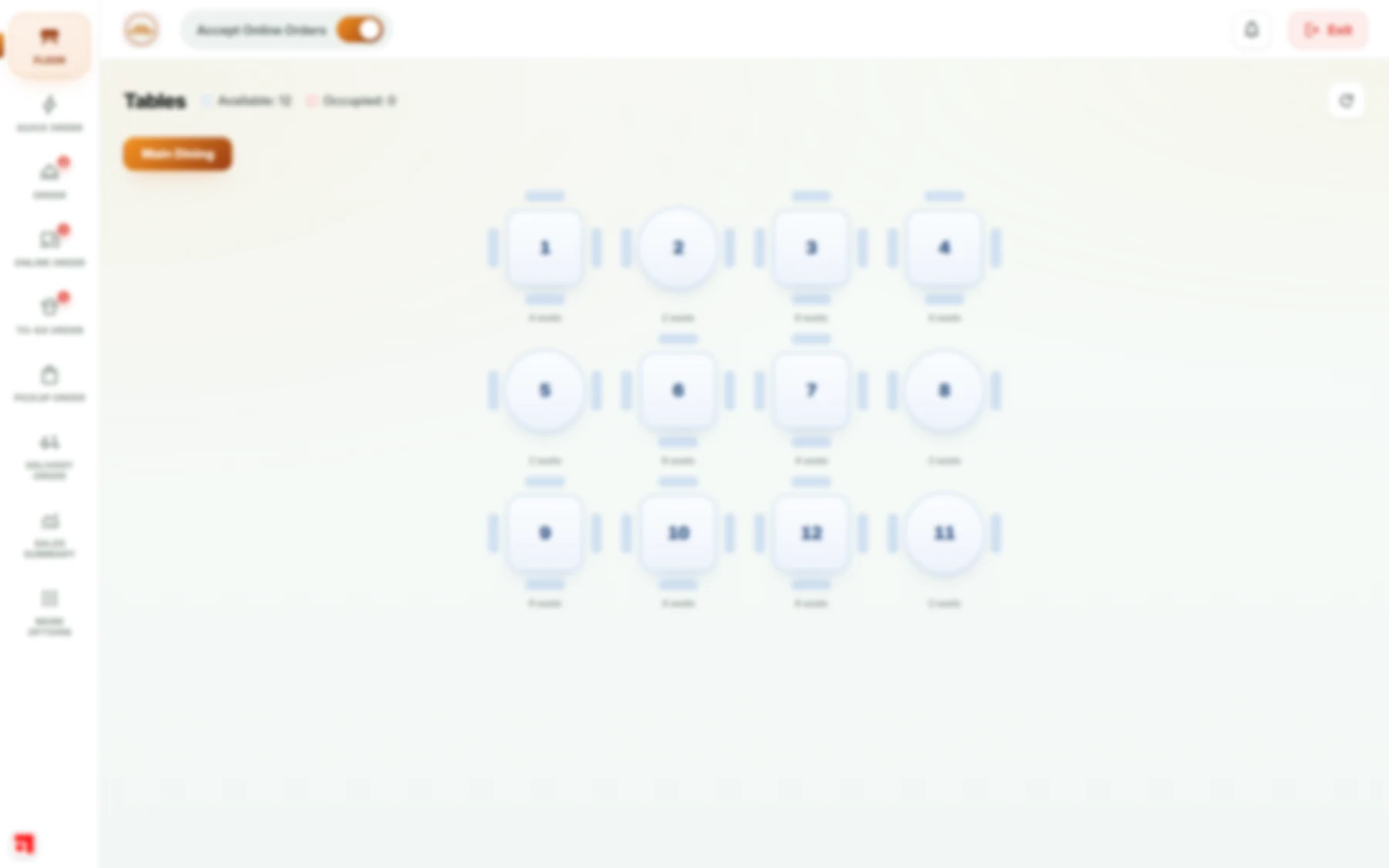
Dine-in service needed more than a list of table numbers. The till includes a drawn floor plan with zones, per-table seats and table shapes.
A restaurant system configured per brand
Aerosoft built one application that gives each restaurant three surfaces: a public ordering website for customers, a staff till and a kitchen display. A new restaurant goes live through configuration and its own data store, without forking the codebase.
The till supports PIN sign-in, staff roles, order types, floor plans, loyalty points, promotions, attendance, live sales reporting and day-end summaries. The kitchen display moves tickets through new, accepted and ready, while customer messages send order confirmations and ready-for-collection alerts by chat and SMS.
Service at the counter
Staff can sign in by PIN, work by role, take dine-in, quick service, online, to-go, pickup and delivery orders, and apply loyalty redemptions at the till.
Tickets with kitchen detail
Kitchen staff see tickets by state, with item modifiers and allergy notes included. Thermal tickets print to the kitchen.
New restaurant, same code
Each brand is a configuration file with isolated data. The same codebase runs restaurants without separate forks.
Several Cayman brands running from one codebase
The platform runs live for Grand Cayman brands including Desi Kitchen, Curry in a Hurry and Dumplings Delights. Each restaurant gets its own customer ordering site, staff till and kitchen display, while Aerosoft maintains one codebase across the group.
One system per brand
Restaurants get dine-in, pickup, delivery, loyalty, attendance and reporting in one application. Prices are held in the local currency, with a US dollar rate applied at the till.
Clear work by role
Till staff work with PIN sign-in, roles and table layouts. Kitchen staff work from ticket states, modifiers, allergy notes and printed kitchen tickets.
The till and the kitchen screen.
Two surfaces of the same build, in a live restaurant. Interface intentionally blurred: live client system.
100% IP transfer. No vendor lock-in.
Aerosoft transfers full intellectual property to clients on completion, uncommon in software development, where many agencies keep the upper hand through licensing or proprietary dependencies. Aerosoft's model ensures the client genuinely owns what was built.
Source code
All application code, every line, transferred on payment completion.
Schemas & data
Database schemas, migrations, seed data and ERD documentation.
Integrations & docs
API integration code, configuration, runbooks and architecture docs.
Running multiple restaurant brands?
Aerosoft can build one codebase that fits each brand through configuration, not code forks.
Get a quote